15 Horror Movies Inspired by Agatha Christie and Her Murder Mysteries

Agatha Christie is known as the Queen of Crime, but her influence extends well beyond traditional murder mysteries. Her stories helped establish some of the most recognizable structures in modern suspense and horror filmmaking.

One of her most famous novels, And Then There Were None, contains nearly every ingredient of a modern slasher film. A group of people are invited to an isolated location, someone begins killing them one by one, the survivors turn against one another, and nobody knows who will be next. It is a formula that has since appeared in countless horror films, from psychological thrillers to outright blood-soaked slashers.
Christie's influence is not always direct. Some filmmakers have openly acknowledged her work as an inspiration, while others have borrowed from the same storytelling traditions she helped popularize. Either way, the relationship between the classic murder mystery and modern horror is worth examining.
For more on the history of the strange disappearance of Agatha Christie and the impact of her works on horror, listen to episode 217 and 218 of the Lunatics Radio Hour podcast.
Here are some of the films that demonstrate how Christie's storytelling continues to influence the movies we watch today, these are horror movies inspired by Agatha Christie.
The Original Blueprint: And Then There Were None
Published in 1939, And Then There Were None remains one of Christie's most celebrated novels and one of the clearest examples of her ability to build suspense through an ensemble cast.

Ten strangers are invited to an isolated island by an unknown host. Once they arrive, they discover that each has been accused of causing someone's death and escaping responsibility. Soon, the guests begin dying one by one, with each murder following the pattern of a sinister nursery rhyme.
The premise is particularly effective because there is no traditional detective at the center of the story. The characters are left to investigate one another while simultaneously trying to survive. Everyone is a suspect, everyone has something to hide, and the possibility of escape becomes increasingly remote.
This structure would become a staple of horror filmmaking. The isolated location, escalating body count, mysterious killer, and increasingly paranoid survivors are all recognizable ingredients of the slasher genre. The novel also plays with the audience's expectations about who will survive, who can be trusted, and whether the killer is even identifiable among the remaining characters.
Filmmaker Rian Johnson has made this connection himself. In an interview with The New Yorker, while discussing his approach to the murder mystery genre, Johnson described And Then There Were None as a slasher movie. He also compared Christie's The A.B.C. Murders to a serial-killer thriller. It is a particularly interesting observation because Christie was writing decades before the slasher genre became a recognizable category of filmmaking. Her novel was not a slasher film, of course, but it contained a storytelling structure that would eventually become central to the genre.
From Murder Mystery to Modern Horror
1. Identity (2003)
Few modern films provide a more obvious comparison to And Then There Were None than James Mangold's Identity.

During a violent rainstorm, ten strangers find themselves stranded at an isolated motel. As the weather prevents anyone from leaving, the guests begin dying under increasingly mysterious circumstances. The film immediately establishes the familiar closed-circle mystery: a limited group of characters, an isolated setting, and a killer who appears to be among them.
Like Christie's novel, the audience is encouraged to examine each character, search for connections, and question who might be responsible. However, Identity takes the premise into psychological horror territory, eventually introducing a very different explanation for the events. The film is particularly interesting because it combines the traditional murder mystery with the conventions of the modern slasher and psychological thriller.
It is an excellent example of how the basic architecture of a Christie mystery can be transformed into something much more disturbing.
2. Ready or Not (2019)
In Ready or Not, a young bride discovers that marrying into a wealthy family comes with an unusual wedding-night tradition. Grace is invited to participate in a family game, only to discover that she has drawn a particularly unfortunate card. The family must hunt her down before sunrise, turning what should be a celebration into a night of survival.

The film shares several elements with And Then There Were None: an isolated setting, a wealthy group with secrets, a series of escalating deaths, and the question of who will survive.
There is also an explicit reference to Christie's famous novel within the film, making the comparison particularly appropriate.
Where Christie builds suspense through suspicion and deduction, Ready or Not turns the premise into a darkly comic survival horror film. The result is a modern variation on the idea that a gathering of seemingly respectable people can conceal something extraordinarily violent.
3. Bodies Bodies Bodies (2022)
A group of wealthy young friends gather at a remote mansion during a hurricane. To pass the time, they begin playing a party game called Bodies Bodies Bodies, in which one person secretly becomes the killer.
When someone actually turns up dead, the game becomes a nightmare.

The film shares the essential ingredients of a closed-circle murder mystery. The characters are trapped, the killer is presumably among them, and every interaction becomes an opportunity to uncover another secret.
However, Bodies Bodies Bodies updates the formula for a generation obsessed with social media, personal branding, and performative friendships.
The film's particular strength is its examination of group paranoia. As the body count rises, the characters become increasingly suspicious of one another, with accusations and misunderstandings becoming just as dangerous as the killer. It is a contemporary interpretation of the Christie setup, filtered through the language of social satire and slasher horror.
4. House of 9 (2005)
Nine strangers wake up imprisoned inside a house. They are informed that they must compete in a deadly game, and that only one person will be allowed to leave. The premise is a straightforward variation on the isolated-group murder mystery, but it pushes the idea toward psychological survival horror.

Like Christie's characters, the strangers must determine whether they can trust one another while trying to understand why they have been brought together in the first place.
The film is particularly useful when examining how the closed-circle mystery evolved into stories built around elimination games and survival competitions.
5. Nine Dead (2010)
In Nine Dead, nine strangers are kidnapped and locked inside a room. Their captor tells them that someone will die every ten minutes unless they can identify the connection between them.

The setup immediately recalls the central appeal of a Christie mystery: seemingly unrelated people are brought together, and the discovery of a shared secret becomes essential to understanding the murders.
Unlike a traditional whodunit, however, the film places greater emphasis on the characters' desperation and the physical threat of their situation.
6. Would You Rather (2012)
A group of financially desperate people are invited to the home of a wealthy philanthropist who promises to help them solve their problems. In exchange, they must participate in a game involving increasingly disturbing choices.

The film uses the familiar combination of a wealthy host, a confined group of strangers, and an escalating series of deadly events.
There is also an interesting moral dimension. As the characters are forced to make decisions that threaten their own survival, the film examines how desperation changes people's behavior.
It is less concerned with solving a traditional murder mystery than with exploring what happens when ordinary people are placed in extraordinary circumstances.
Slasher and Horror Movies Inspired by Agatha Christie
7. A Bay of Blood (1971)
Mario Bava's A Bay of Blood, also released as Twitch of the Death Nerve, is an important film in the development of the slasher genre. The story revolves around a series of murders connected to competing claims over a secluded bay. As various characters attempt to secure ownership of the property, the body count begins to rise.

The film is particularly relevant because it helped establish several visual and narrative conventions that would later become associated with slasher filmmaking. Its emphasis on multiple victims, elaborate killings, competing motives, and an increasingly unpredictable series of murders makes it an interesting companion to And Then There Were None.
It would be inaccurate to describe the film as a confirmed adaptation of Christie, but the similarities between the two storytelling approaches are worth exploring. Both use an isolated setting and a group of characters whose individual interests and secrets contribute to a growing series of deaths.
Bava's film also demonstrates how the traditional murder mystery could evolve into something more graphic and visceral.
The Murder Mystery Reinvented
Not every descendant of Christie's storytelling is a horror film. Some of the most interesting examples are modern mysteries that have revived the ensemble format, elaborate plotting, and suspicious characters that made her work so popular.
8. Knives Out (2019)
Rian Johnson's Knives Out is perhaps the most famous modern example of the Christie-style murder mystery. When wealthy crime novelist Harlan Thrombey is found dead after his birthday celebration, detective Benoit Blanc is brought in to investigate. The family members all have their own motives, secrets, and complicated relationships with the deceased.

Johnson has openly discussed his love of Christie, explaining that he grew up reading her novels. He has also spoken about the appeal of using the traditional whodunit structure as a framework for exploring other genres and ideas.
What makes Knives Out particularly effective is its understanding that a murder mystery is about much more than identifying the killer. The characters, their relationships, their social positions, and their individual motivations are just as important as the final reveal.
It is a modern reinvention of the classic country-house mystery, updated with contemporary social commentary.
9. Glass Onion: A Knives Out Mystery (2022)
The sequel to Knives Out takes Benoit Blanc to a private Greek island, where a wealthy technology entrepreneur has invited a group of friends and professional rivals for a murder-mystery weekend.
The gathering quickly becomes something much more dangerous.

There is a particularly interesting connection between Glass Onion and the 1973 film The Last of Sheila, which Johnson has identified as a major influence.
Both films involve a wealthy host inviting a group of acquaintances to an exotic location for an elaborate game involving secrets and murder. In both cases, the game becomes entangled with a real crime.
Johnson has also discussed the influence of Christie's glamorous vacation mysteries, including Evil Under the Sun and Death on the Nile.
The film demonstrates how the traditional ensemble murder mystery can be adapted to a contemporary setting without losing the elements that made the genre so effective.
10. The Last of Sheila (1973)
Although not a horror film, The Last of Sheila deserves a place in this conversation because it represents an important bridge between classic murder mysteries and modern ensemble thrillers. Written by Stephen Sondheim and Anthony Perkins, the film follows a wealthy Hollywood producer who invites a group of acquaintances aboard his yacht for a series of elaborate mystery games.

Each guest receives a secret identity or piece of information, and the games are designed to expose the secrets of the other participants. However, the entertainment takes a darker turn when a real murder occurs.
The film is particularly relevant because it shares the elaborate game-playing, hidden motives, wealthy suspects, and exotic setting found in many Christie mysteries.
Rian Johnson has specifically cited The Last of Sheila as a major influence on Glass Onion. He has also discussed his admiration for Christie's vacation mysteries, which helped establish the glamorous, destination-based murder mystery.
11. See How They Run (2022)
Set in 1950s London, See How They Run takes place during a theatrical production of Agatha Christie's The Mousetrap. When a murder takes place among the production's cast and crew, a police inspector and an enthusiastic young constable investigate.

The film is essentially a love letter to the murder mystery genre, complete with theatrical personalities, suspicious suspects, and plenty of references to Christie herself. It also plays with the audience's expectations about the traditional whodunit, making it a particularly entertaining addition to this list.
While it is not horror, it demonstrates just how deeply Christie's storytelling conventions have become embedded in popular culture.
12. Clue (1985)
Based on the popular board game, Clue brings together a group of strangers at a mysterious mansion, where a series of murders unfolds. The guests are given aliases, the host has secrets, and everyone appears to have a motive.

The film is a comedy, but its structure is rooted in the classic murder mystery. It uses a confined setting, an ensemble of suspicious characters, and multiple possible killers to keep the audience guessing. Its playful approach to the genre makes it an interesting contrast to Christie's more serious mysteries.
It also demonstrates how the country-house murder formula became a familiar part of popular entertainment, eventually inspiring everything from theatrical comedies to family board games and modern whodunits.
13. Murder Mystery (2019)
Adam Sandler and Jennifer Aniston star as a married couple who find themselves embroiled in a murder investigation while vacationing aboard a billionaire's yacht. When their wealthy host is murdered, the couple become suspects and must attempt to identify the real killer.

The film is a contemporary comedy built around a familiar Christie-style premise: a glamorous vacation, a wealthy collection of suspects, a confined group, and a murder that nobody can explain.
It is a lighter example of the genre, but it demonstrates how the classic ensemble mystery continues to provide an appealing framework for modern filmmaking.
When the Murder Mystery Becomes Horror
Some of the most interesting modern films are those that combine the traditional murder mystery with the atmosphere and tension of horror.
14. The Hateful Eight (2015)
Quentin Tarantino's The Hateful Eight takes place almost entirely inside an isolated Wyoming haberdashery during a blizzard. A group of strangers seek shelter from the storm, but it quickly becomes apparent that not everyone is who they claim to be.

As tensions rise, the characters begin questioning one another's identities and motives. Violence eventually erupts, and the confined location becomes a dangerous environment in which nobody can be trusted.
The film shares several structural elements with And Then There Were None: an isolated setting, a group of suspicious strangers, hidden identities, and the growing realization that someone may be responsible for a larger plan. Though, it is not a direct Christie adaptation, it still belongs in this list.
15. The Menu (2022)
A group of wealthy diners travel to an exclusive restaurant on a remote island for an elaborate tasting experience prepared by a celebrated chef.
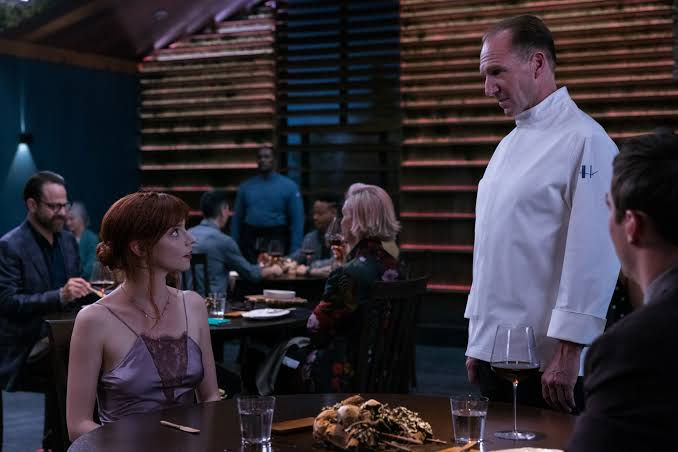
As the evening progresses, it becomes clear that the guests have not been invited simply to enjoy dinner.
The Menu uses many familiar elements of the classic murder mystery: an isolated location, a powerful host, a group of guests with hidden secrets, and a series of increasingly disturbing revelations.
However, the film transforms those conventions into a dark social satire and psychological horror story.
The restaurant becomes a closed environment from which the guests cannot easily escape, while the chef's carefully orchestrated evening begins to resemble an elaborate murder plot.
It is another example of the Christie-style ensemble gathering being repurposed for a very different kind of story.
So, Did Agatha Christie Help Invent the Slasher?
It would be an exaggeration to suggest that Agatha Christie invented the slasher film. The genre developed through several different traditions, including Gothic horror, crime fiction, suspense cinema, and earlier exploitation films.
However, it is difficult to overlook the similarities between the structure of And Then There Were None and the formula that would eventually become familiar in slasher films.
Christie brought together a group of characters, isolated them from the outside world, introduced a mysterious killer, and began eliminating the cast one by one. The audience was left to examine the survivors, identify possible motives, and determine who might be next.
The slasher genre would eventually take those same basic ingredients and change the emphasis. Rather than focusing primarily on the intellectual challenge of identifying the murderer, horror filmmakers placed greater attention on the experience of being hunted.
The audience might still wonder who the killer is, but the central question becomes whether anyone will survive. This is precisely what makes And Then There Were None such an interesting novel to revisit through a horror lens.
It also helps explain why Christie's influence remains so visible in contemporary filmmaking. Her stories were never simply about solving a murder. They were about creating a situation in which every character could become a suspect, every relationship could conceal a secret, and every new piece of information could completely change the story.
Rian Johnson's description of And Then There Were None as a slasher movie is a particularly useful way of understanding this connection. Christie was comfortable experimenting with different genres inside the murder mystery framework, something modern filmmakers continue to do.
From Identity and Ready or Not to Knives Out and Glass Onion, the influence of the classic whodunit can be found across contemporary cinema.
The Queen of Crime may not have been making horror movies, but she certainly understood how to keep an audience guessing who would die next.
For more on the history of the strange disappearance of Agatha Christie and the impact of her works on horror, listen to episode 217 and 218 of the Lunatics Radio Hour podcast.
Sources


